
Yoann Ignatiew
General Partner, Head of International Equity and Diversified

General Partner, Head of International Equity and Diversified

Global Equities Portfolio Manager

General Partner, Head of Fixed Income
Inflation, which remains the focus of attention, increases the tension on central bankers, pushing them to an ever more restrictive stance. In Europe, year-on-year inflation hit a new record at +10% in September, driven mainly by energy prices, which are now more than +41% higher than in the same month last year(2); meanwhile, prices of food were up by an estimated +11.8% year on-year(3). Inflation is running unevenly from one country to another, with the lowest rate being observed in France at 6.2%. In early September, the ECB once again raised its key rates, but this time by 75 basis points (bps), the steepest hike in its history. In the US, total inflation shifted downward to 8.2% year-on-year, but structural inflation continued to rise, reaching 6.6% in September(3). The latter, excluding mainly energy and food prices, is driven by an increase in rents and, to a lesser extent, medical services. The Fed also raised its key rates by 75bps in September and yet another increase of the same magnitude is expected for November.
China continues to be impacted by its zero-Covid policy, which is eating into consumers’ propensity to spend, despite government stimulus measures. The Golden Week(4) tourist season is rather telling in this regard, as it was less busy than last year, due to Covid-19 restrictions. In the next few days, the Party congress will take centre-stage, beginning on 16 October. The re-election of Xi Jinping to a third term could point to a relaxation in restrictions.
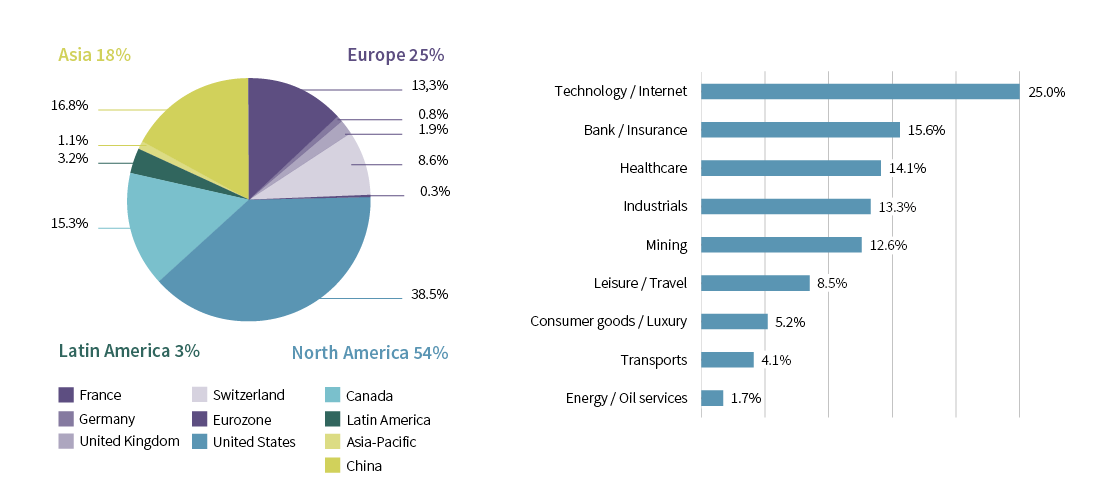
R-co Valor has lost 12.9% on the year to date(5). In terms of performance contribution over the quarter, the luxury goods sector stood out, particularly driven by LVMH, as did the energy sector, where our exposure, after a reduction, was focused on oil equipment manufacturer Schlumberger. Technology, on the other hand, was the worst contributor, impacted by the rise in US treasury yield.
The markets are now parsing bellwether macroeconomic releases for hints of a trend in central bank policies. In the US, total inflation has receded over the past two months, but structural inflation has risen further. However, the real estate component of the latter figure should, in our view, decline over the coming months. In Europe, which is behind the cycle, we expect a later peak, probably not before early 2023. From now till yearend, the markets will continue to be guided by inflation-themed statements from central banks. We nonetheless feel that there are some good opportunities out there, and we will be ready for them, in accordance with the fund’s DNA. Investors have taken a highly conservative approach in hoarding cash, and good news could very quickly push them into deploying it.
Completed on 14 October 2022
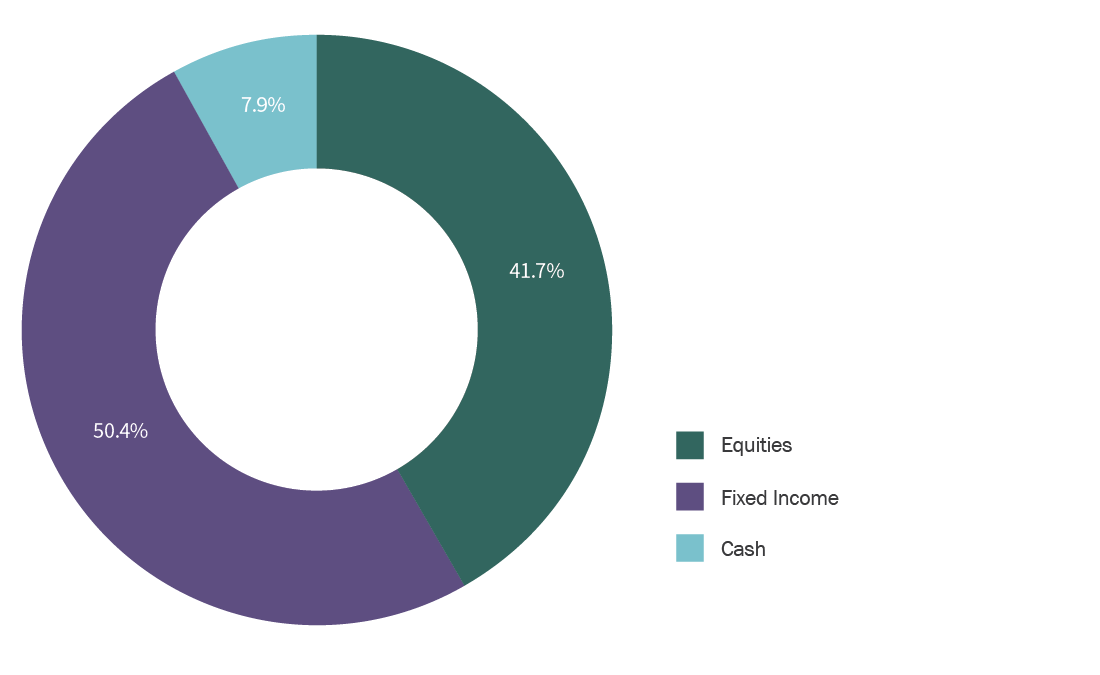
As of the end of September, the fund’s equity exposure was 42%, while its fixed income exposure remained unchanged at 50%.
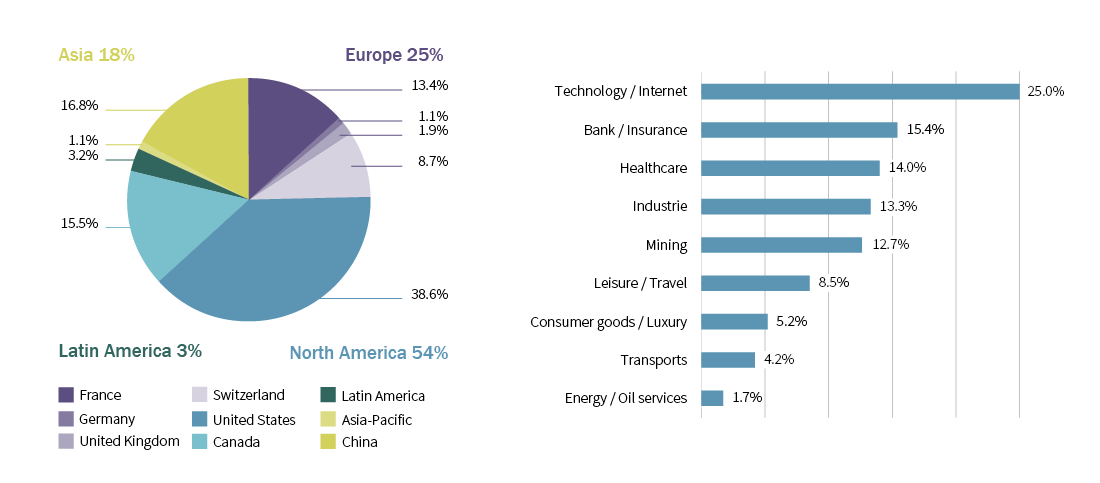
R-co Valor Balanced equity allocation replicates that of R-co Valor.
Both funds have the same exposures and are subject to the same modifications.
Treasury yields continued to rise steeply on the quarter. The 10-year German Bund ended at 2.11% (vs. -0.22% at the start of the year) and the US 10-year rate ended at 3.83% (vs. 1.5% at the start of the year)(6). Although inflation expectations have dipped slightly, to 2.09% in Germany and 2.16% in the US(6), the shift in real rates was very significant. As a result, the real 10-year Bund moved back into positive territory at 0.02%, after spiking by 80bps. In the US, the real 10-year yield ended at 1.68% (+96bps) and the 2-10-year curve inverted a little more, at -45bps(6).
Monetary tightening on both sides of the Atlantic exerted strong upward pressure on credit markets. Both Investment Grade(7) and High Yield(8) indexes are down by 15% on the year to date(6). By sector, financials and subordinated debt in particular underperformed.
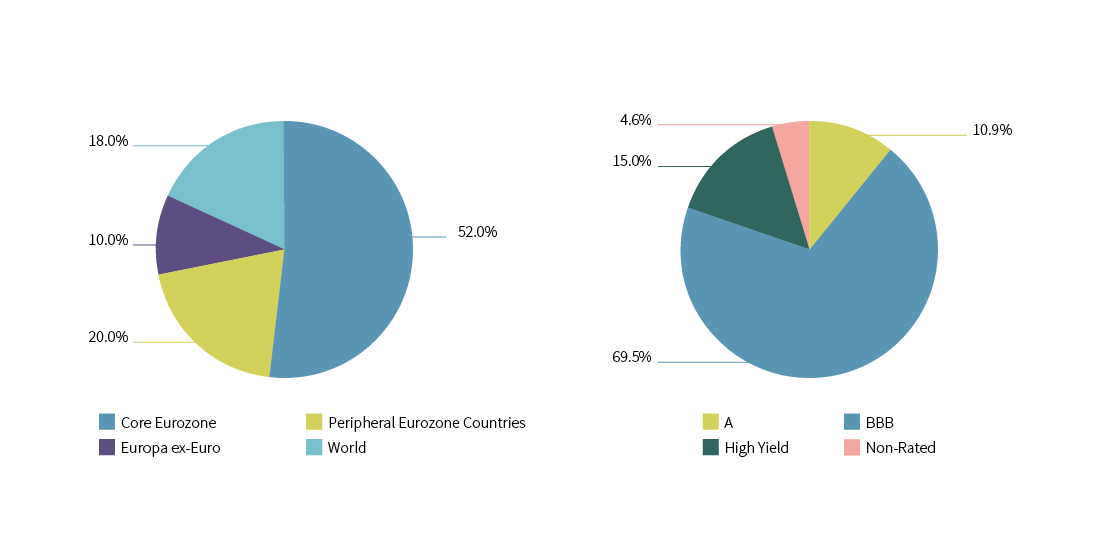
Regarding our fixed income allocation, the very attractive yields in Investment Grade allowed us to seize opportunities on the primary and secondary markets in intermediate maturity and at limited risk. For example, during the reporting period, we made a few switches, mainly in Investment Grade. We sold bonds that are relatively expensive, in order to seize primary market opportunities, such as Crelan, a Belgian mutualist bank and senior BBB- issuer, on a 2025 maturity and offering a 5.4% yield(6). We reduced our High Yield and non-rated exposure on the margins during the quarter. It now accounts for less than 20% of the fixed income allocation.
Completed on 14 October 2022.
(1) Source: Bloomberg, 30/09/2022. Performance in local currency.
(2) Source: Eurostat – October 2022.
(3) Source: Bloomberg, October 2022.
(4) Chinese Golden Week is an annual holiday in China. It begins on October the first of each year with the National Holiday of the People’s Republic and was launched by the Chinese government in 1999.
(5) Source: Rothschild & Co Asset Management Europe, 30/09/2022. Share C EUR.
(6) Source : Bloomberg – October 2022.
(7) Debt securities issued by companies or governments rated between AAA and BBB- on the Standard & Poor’s scale.
(8) High-yield bonds are issued by companies or governments with a high credit risk. Their financial rating is below BBB- on the Standard & Poor’s scale.
The geographical and sector allocations and distributions are not fixed and may change over time within the limits of the fund’s prospectus.
The figures quoted relate to the past months. Past performance is not a reliable indicator of future performance and is not constant over time.


