Marc-Antoine Collard
Chief Economist – Director of macroeconomic research

Chief Economist – Director of macroeconomic research
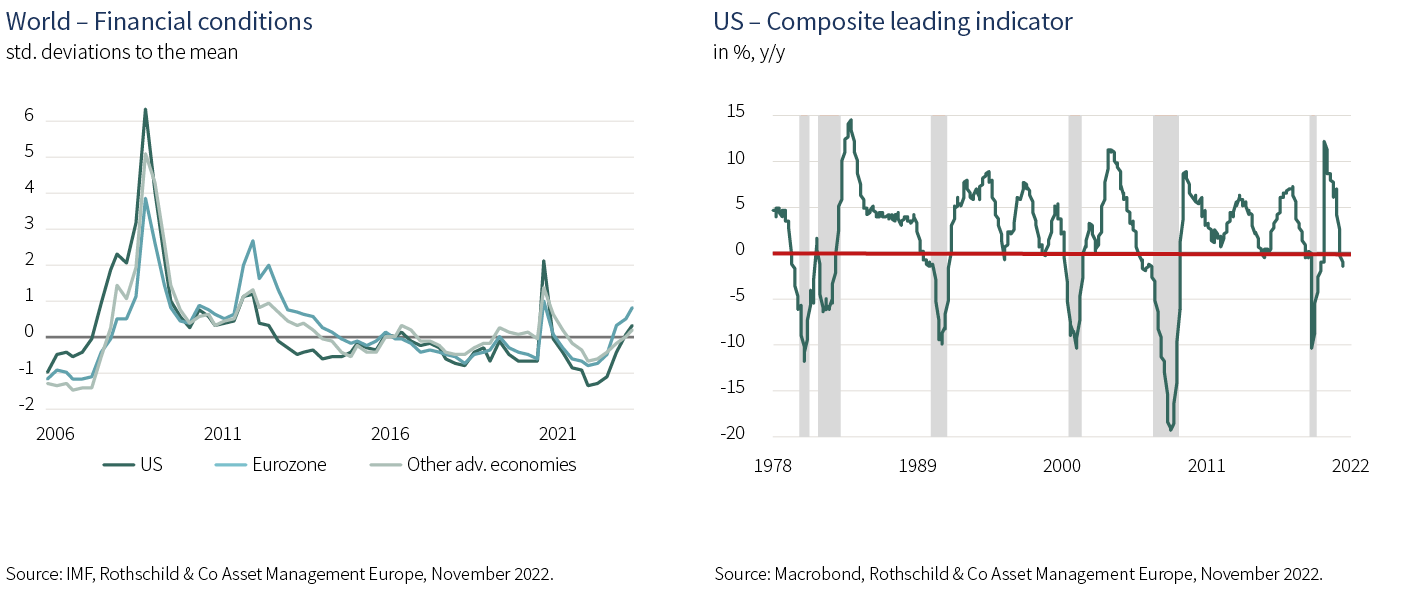
The world economy continues to face strong headwinds, yet neither the IMF nor most private investors expect a global recession. Markets remain hopeful that central banks will soon pause the tightening campaign and give economic activity a breather, although the stubborn persistence of inflation could dampen those hopes.
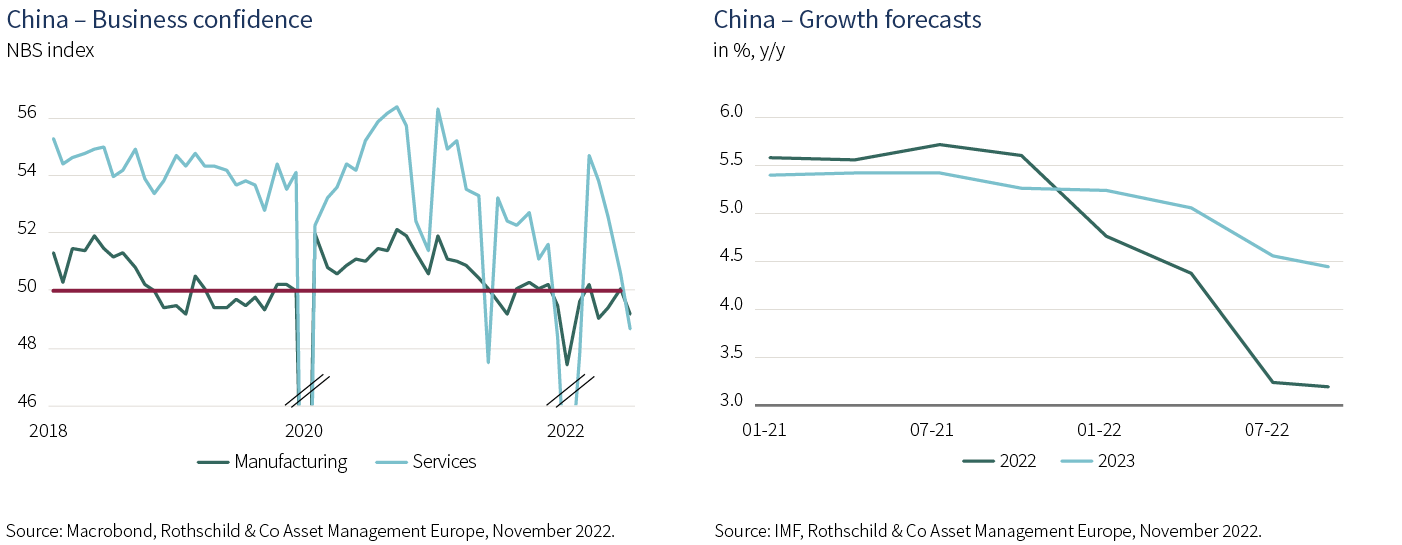
While the pandemic’s impact has moderated in most countries, its lingering waves continue to disrupt economic activity, especially in China. Although the Chinese GDP grew 3.9% q/q in Q3 2022 thanks to the reopening effects, thus rebounding from the -2.7% drop in Q2, the monthly indicators for September painted a weak picture at the end of the quarter(1). Unemployment rose to 5.5%(1) and retail sales growth slowed more than expected, dented by quarantine measures. Investors are hoping for a shift from the zero-Covid policy, yet China’s National Health Commission resolutely adhered the policy after rumours buoyed hopes the policy would be eased.
Meanwhile, house prices fell for a thirteenth consecutive month and, despite government policies to support the market, the real estate sector contracted for a fifth straight quarter, extending its longest slump in history. Manufacturing capacity utilisation slowed to less than 76%(2), its lowest level in five years barring the acute phase of the pandemic. Such disruptions have spill over internationally, as lower domestic demand implies fewer exports for China’s trade partners, while capacity constraints in production and logistics delay the improvement of supply chains, keeping global supply pressures – and hence inflation – elevated. Looking ahead, the outlook remains murky as business confidence fell and were in economic contraction territory in October both in the manufacturing (49.2) and services (48.7)(3) sectors.
In the US, GDP posted its first quarter of positive growth for 2022 in Q3, increasing 0.6% q/q – or 2.6% annualised(4). However, this was in large part due to a narrowing trade deficit amid a significant drop in imports, which is unlikely to be repeated in future quarters, while private domestic demand was lacklustre as inflation is hurting household consumption and the housing sector is getting crushed under the weight of higher interest rates.
In the Eurozone, Q3 GDP growth was better than expected (0.2% q/q)(5) as the German economy (0.3%) was surprisingly resilient despite supply chain disruptions, rising prices and interest rates, and the war in Ukraine. That said, the Eurozone S&P Global business confidence index is signalling that the manufacturing sector is in a recession, with the index falling to 46.4 in October. The new orders sub-index dropped to a level rarely seen during 25 years of data collection – only during the worst months of the pandemic and in the height of the global financial crisis between 2008 and 2009. What’s more, inflation reached a record 10.7% in October(5) and is likely to stay in double-digit territory for some time, hurting household purchasing power and keeping pressure on the ECB to continue raising interest rates. With concerns over the risk of overly high inflation becoming entrenched still having the upper hand, the ECB proceeded with a new 75 bps hike at the October meeting and signalled rates will have to be raised further.
Persistent and broadening inflation pressures have triggered a swift and synchronised tightening of monetary conditions, alongside a powerful appreciation of the US dollar which tightened global monetary and financial conditions. Uncertainties continue to cloud forecasts of global growth and downside risks remain elevated, while policy trade-offs to address the inflation surge have become acutely challenging.
In fact, the risk of monetary, fiscal, or financial policy miscalibration has risen sharply. As economic activity in many parts of the world starts slowing down, and financial fragilities emerge, calls for a pivot toward looser monetary conditions will inevitably become louder. Yet, there are risks of both under- and over-tightening. The former would entrench further the inflation process, erode the credibility of central banks, and de-anchor inflation expectations. Historical records caution strongly against prematurely loosening policy as this would increase the eventual cost of bringing inflation under control. On the other hand, over-tightening could push the global economy into an unnecessarily harsh recession, especially if financial markets struggle to cope with an overly rapid pace of tightening. However, the costs of these policy mistakes are not symmetric and misjudging yet again the stubborn persistence of inflation could prove much more detrimental to future macroeconomic stability.
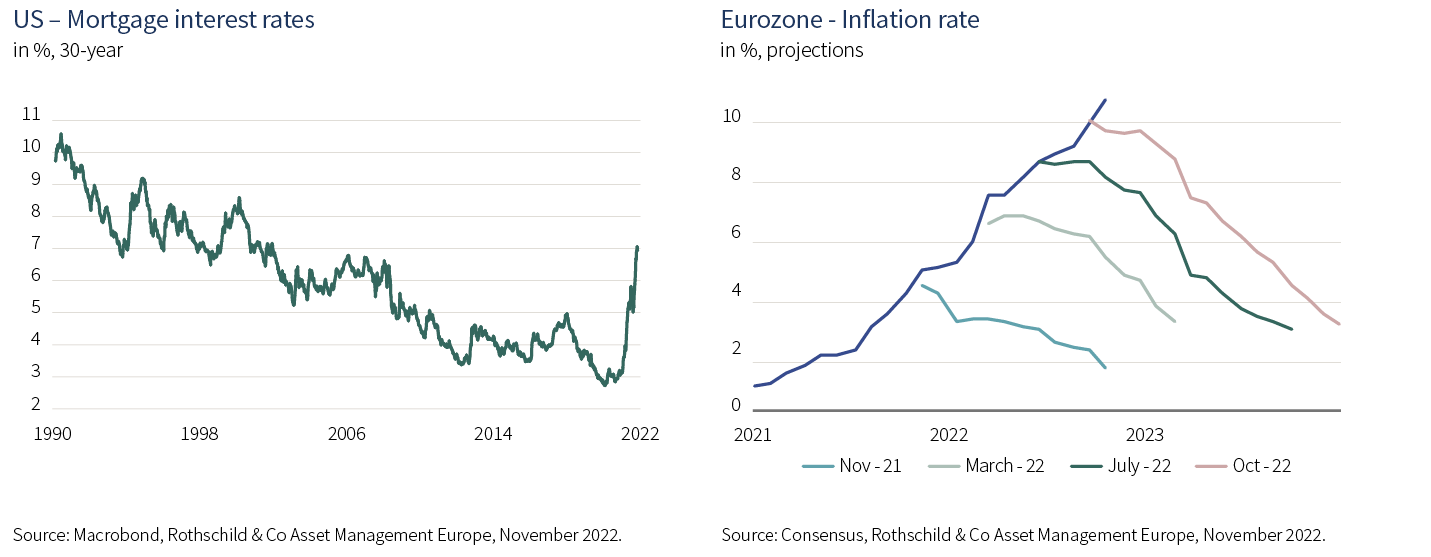
In that context, the Fed delivered a 75 bps rate hike for the fourth meeting in a row in November, bringing the cumulative increase to 375 bps since March. An imminent slowdown in the pace of policy tightening – to a more normal 25 to 50 bps per meeting – is likely as the Fed confirmed its future decisions will take into account the cumulative increases and the lags with which the monetary policy affects economic activity and inflation. However, although Fed Chair Jerome Powell underscored the elevated uncertainty around the level at which the fed funds rate becomes restrictive, the resilient labour market conditions and stubbornly elevated inflation suggest that rates will have to reach a higher level than previously anticipated. In fact, any decision about when to moderate the pace of increases is likely to be much less important than the question of how high to raise rates and how long to keep monetary policy restrictive. On the latter, the Fed expects monetary policy to remain restrictive for some time even though history shows that elevated fed funds rates rarely stay at their peak, especially in an environment of brewing economic stress. Still, the tighter for longer stance saw Chair Powell downgrade the Fed’s prospects of achieving a soft landing, upgrading the probability he placed on a recession. Will investors agree?
Completed writting on 3 November 2022